
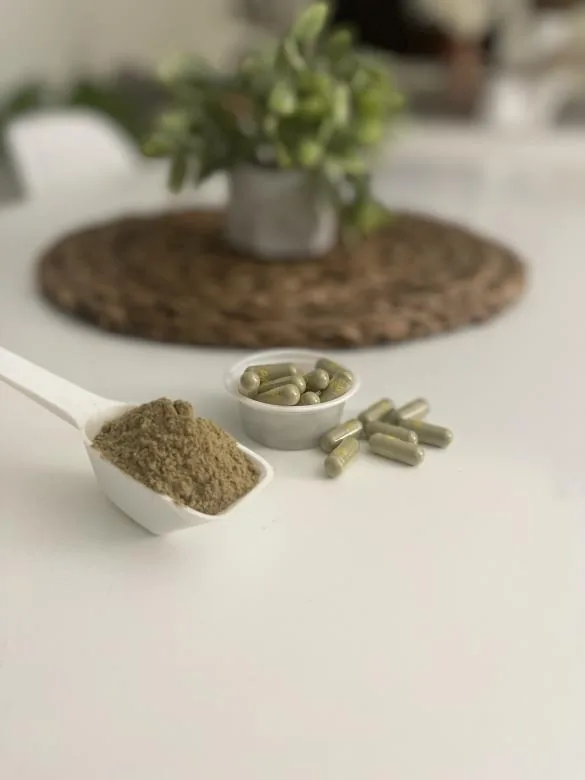
Let us be upfront: this article is not going to tell you what kratom "does". Not because we want to keep it mysterious, but because nobody can say that for you with certainty, and because health claims about kratom are not permitted. What we can do: honestly write down what users describe, what is known about the active compounds, and where the risks are.
What is actually in kratom
Kratom contains alkaloids, of which mitragynine and 7-hydroxymitragynine are the best known. These compounds act on several receptor systems in the brain, including the opioid receptors. That last part is no small detail: it explains why there is a real risk of tolerance and dependence with regular use. We are extensively honest about that in how often is too often.
What users describe
The most consistent pattern in user reports is that the amount determines the character. At low amounts, users more often describe something uplifting: more alert, more talkative, an effect sometimes compared to strong coffee. At higher amounts they describe the opposite: relaxation, heaviness, drowsiness. These are experiences, not promises: there are also people who notice little to nothing, or mainly report nausea.
The colour also plays a role in what people report: red is most often described as relaxed, white as uplifting and green as the middle way. See red, white or green kratom: how to choose.
How fast and how long?
Users typically mention a first noticeable moment after fifteen to forty-five minutes, with a total duration of several hours. On a full stomach that shifts. Many users therefore start low and wait patiently before concluding it "does nothing".
Why we promise nothing
Two reasons. The legal one: kratom is not a medicine and claims about health effects are not permitted. The honest one: the science on kratom is still young, and what exists is mixed. A shop telling you kratom will solve your pain, stress or low mood is selling you a story. We would rather sell kratom with a leaflet of honesty.
The risks are part of the story
Nausea, dizziness and drowsiness occur, especially at amounts that are too high. The combination with alcohol, sedatives or other drugs is known to be risky, and with daily use your body adapts quickly. New to kratom? Then kratom powder: how it is made and used is a fine starting point.
This article is informational and not medical advice. Do not use kratom during pregnancy or breastfeeding, when taking medication (consult your doctor first) or under the age of 18. If you have a history of addiction, be extra cautious.