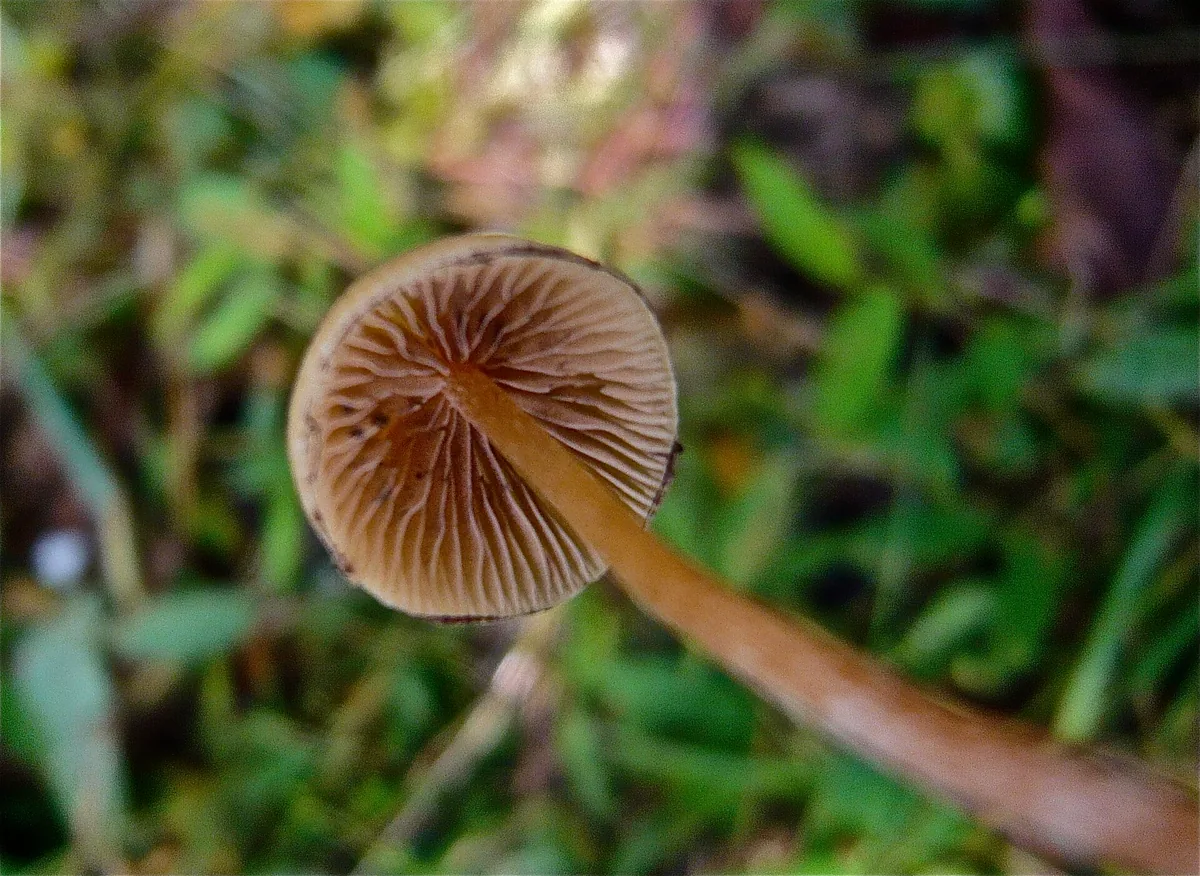
Nature counts more than ten thousand described mushroom species, and only around two hundred of them are hallucinogenic. The vast majority belong to a single genus: Psilocybe. This article explains what makes those species psychoactive, and why in the Netherlands you will mainly encounter their underground form.
What makes a mushroom hallucinogenic?
The answer is usually psilocybin, together with its relative psilocin. Your body converts psilocybin into psilocin, and that molecule resembles serotonin so closely that it binds to the same receptors. The result: your brain temporarily makes different connections, literally.
Hallucinating is not what the film promised
The word hallucinogenic suggests you see things that are not there. The reality is subtler and, honestly, more interesting: patterns that breathe, colours that deepen, music that becomes a landscape.
The best-known species
Psilocybe cubensis is the best-known hallucinogenic mushroom worldwide, and in the Netherlands Psilocybe semilanceata, the liberty cap, was once the wild classic. Since 2008 the mushrooms have been banned here; the sclerotia, or magic truffles, remained legal.
Exploring legally means going underground
If you want to explore the hallucinogenic experience legally in the Netherlands, you arrive at truffles: the same fungus, the same psilocybin, simply for sale. From gentle (Tampanensis) to sturdy (High Hawaiians). We currently ship within the Netherlands only.
This article is informational and not medical advice. Psilocybin is 18+. Not suitable with a personal or family history of psychosis or bipolar disorder, during pregnancy or breastfeeding, or combined with certain medication (consult your doctor first).