
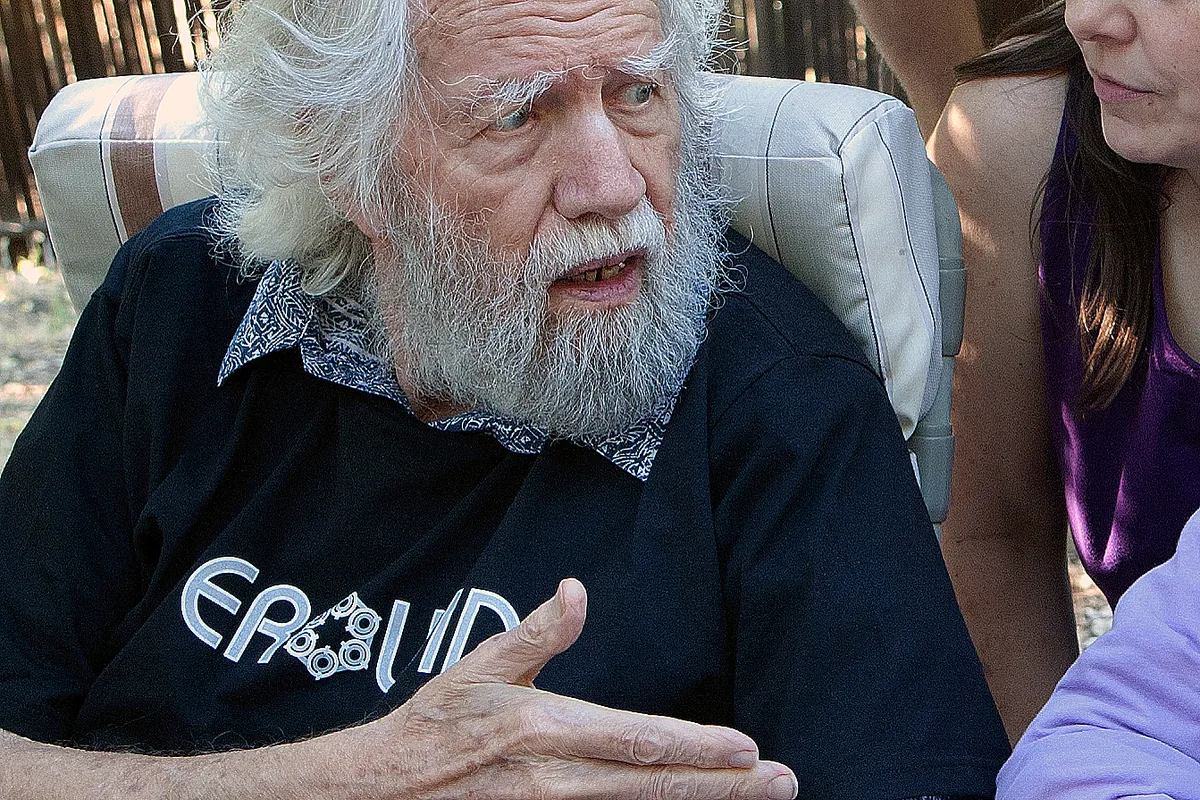
Where Albert Hofmann discovered one famous compound, Alexander Shulgin made hundreds. The American chemist spent his life designing, synthesising and carefully testing new psychoactive molecules. A portrait of an idiosyncratic researcher.
The chemist who became his own lab
Shulgin was a trained chemist with a deep fascination for how small changes to a molecule change the way it works. In his self-built laboratory he designed and made countless compounds, mostly from the groups known as phenethylamines and tryptamines.
MDMA: not invented, but rediscovered
Shulgin is often associated with MDMA. It is important to be honest here: he did not invent MDMA, that compound had been made much earlier. What Shulgin did was rediscover its psychoactive effect and, in the 1970s, bring it to the attention of therapists who wanted to work with it. His role was that of a pioneer, not an inventor.
PiHKAL and TiHKAL
Together with his wife Ann Shulgin he wrote two influential books: PiHKAL and TiHKAL. The titles stand for Phenethylamines and Tryptamines I Have Known And Loved. The books combine a personal story with detailed chemical descriptions, and became a reference point within the psychedelic world.
Methodical and careful
What set Shulgin apart was his methodical approach. He tested new compounds on himself in tiny, slowly increased amounts, kept meticulous notes, and even developed his own scale to describe effects. Reckless he was not, quite the opposite.
A contested but influential legacy
Shulgin's work is not without controversy, and many of the compounds he studied are not legal in the Netherlands and elsewhere. Even so, his influence on thinking about psychoactive substances is considerable. He showed how curiosity, precision and respect for the substance can go together.
Read the other parts in this series too: Terence McKenna, Timothy Leary, Roland Griffiths and Albert Hofmann.
This article is historical and informational. Many of the substances Shulgin worked on are not legal in the Netherlands. It describes his life and work and is not an encouragement to use.