
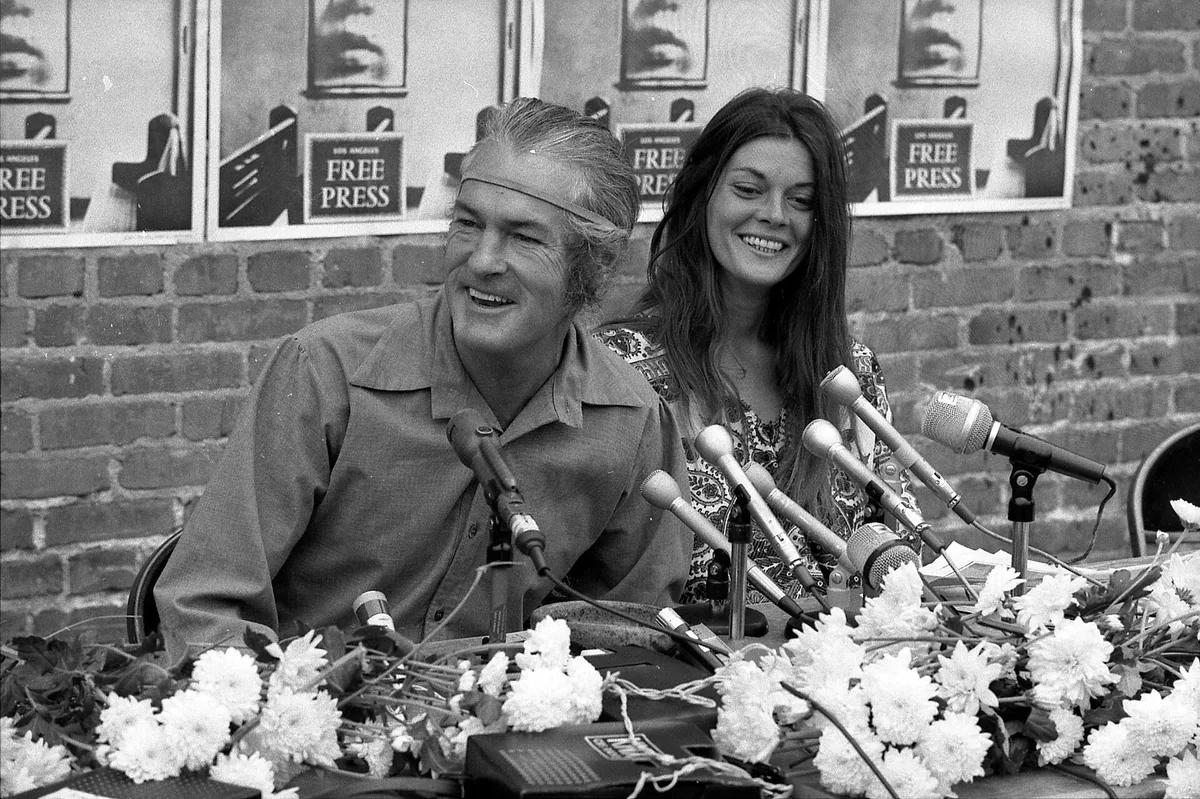
If Terence McKenna was the poet of the psychedelic movement, then Timothy Leary (1920–1996) was its provocateur. No name is so intertwined with the turbulent history of psychedelics in the twentieth century, and about no name do opinions diverge so sharply. Was he a visionary scientist, an irresponsible charlatan, or both at once? In this second part of our series we look beyond the slogans.
From respected psychologist to Harvard rebel
What many people forget: Leary started out as a serious, respected academic. He was a clinical psychologist with a solid reputation, and in the 1950s he published influential work on personality diagnostics that was used in the field for years. In 1959 he ended up at Harvard, hardly a backwater of science.
The turning point came in 1960, during a holiday in Mexico, where he ate psilocybin mushrooms for the first time. The experience touched him so deeply that, by his own account, he learned more about the human mind in a few hours than in years as a psychologist. Back at Harvard, together with his colleague Richard Alpert (later known as the spiritual teacher Ram Dass), he set up the Harvard Psilocybin Project: a series of experiments with psilocybin on volunteers, prisoners and theology students.
Where the science ended and the movement began
Here the story gets complicated, and telling it honestly means showing both sides. Some experiments had a serious design and produced interesting observations. But by scientific standards the methodology was messy: Leary and Alpert often took the substances themselves during experiments, the line between researcher and subject blurred, and there was little control. Colleagues grew concerned, and in 1963 both were dismissed by Harvard, an academic scandal that made the front pages.
That dismissal was a turning point. Instead of retreating, Leary embraced the role of public prophet. He shifted from the laboratory to the counterculture and became the figurehead of an entire generation experimenting with expanded consciousness.
"Turn on, tune in, drop out"
In 1966 Leary launched the phrase that would follow him for the rest of his life: a call to activate your consciousness, to tune in to your inner world, and to break free from conventional expectations. To his followers it was an invitation to self-inquiry; to his critics an urging for young people to quit school and work. Leary later complained that the phrase was massively misunderstood, but the damage was done: he became the face of what conservative America saw as the ruin of its youth.
The reaction was harsh. President Nixon is said to have once called him 'the most dangerous man in America'. More important for history: the moral panic around figures like Leary contributed to the strict anti-drug legislation introduced in the late sixties, legislation that then all but shut down scientific research into psychedelics for decades. That is Leary's painful paradox: the man who made psychedelics famous also helped drive them into the scientific wilderness.
Prison, escape and the later years
Leary's life became even more adventurous than his ideas. He was arrested for drug possession, received a disproportionately heavy sentence, escaped spectacularly from prison in 1970, fled abroad and was eventually recaptured. In his later years his fascination shifted to space travel, computers and the early internet, which he called, not without a sense of showmanship, 'the new LSD'. He died in 1996, and remained to the end the showman who turned his own death into a public, almost cheerful experiment.
What we can learn from Leary, including what not to
Leary's legacy is a lesson in nuance. On the one hand, he permanently opened up the conversation about consciousness and psychedelics; much of today's careful scientific reappraisal of psilocybin stands, in a sense, on his shoulders. On the other hand, his story shows exactly how not to do it: enthusiasm without care, a movement without brakes, and stirring up vulnerable people with no eye for the consequences.
For us, that is the heart of it. The modern approach to psychedelics, preparation, careful dosing, attention to set and setting, and honesty about the contraindications, is in a sense a correction to the recklessness of the Leary era. Not because his curiosity was wrong, but because curiosity without care can harm people. The best tribute we can pay Leary is to keep the good part of his legacy and not repeat the irresponsible part.
In the next part of this series we shift from the provocateurs to the scientists: the researchers who brought psychedelics back out of the underground and into the laboratory, and who this time did handle them with care.