
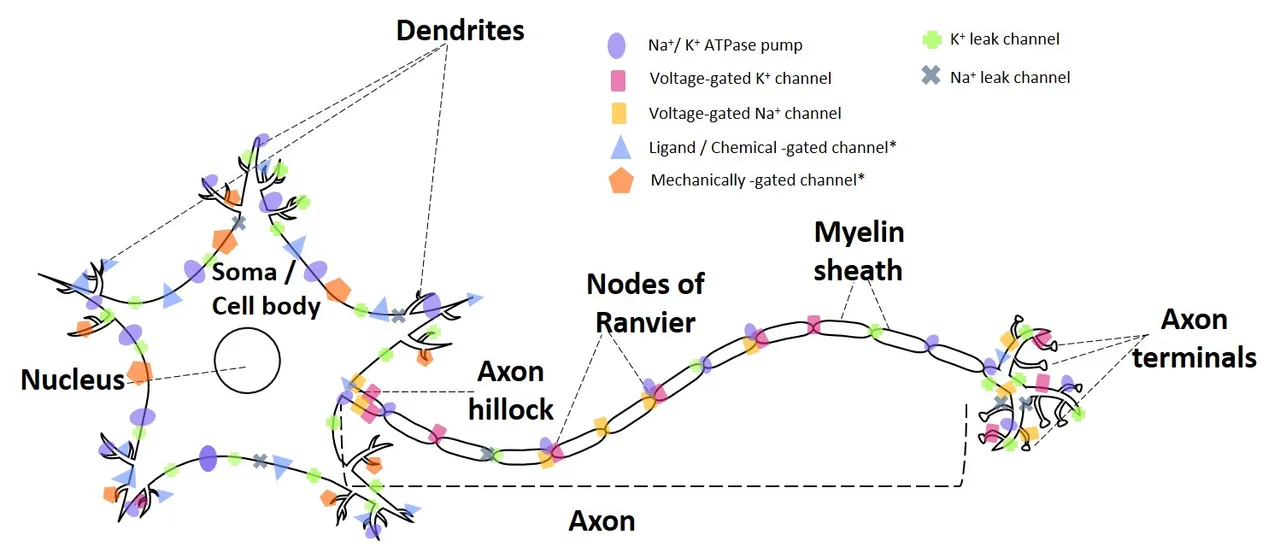
Few words come up as often in conversations about psychedelics as neuroplasticity. It sounds impressive, and that cuts both ways: it raises hope, but it is also easily used as a magic word. In this piece we unpack it calmly, without big promises.
What neuroplasticity actually is
Your brain is not fixed wiring but a network that is constantly reshuffling itself a little. Connections between nerve cells grow stronger or weaker as you learn, practise or take in new experiences. That capacity is called neuroplasticity. It is not a special trick of psychedelics, it is a basic feature of how your brain works, from infancy into old age.
Why researchers look at this with psilocybin
Since science seriously returned to this field, something we wrote about in our portrait of Roland Griffiths, researchers have been studying whether psilocybin can temporarily open a window in which the brain responds a bit more flexibly. Centres such as the Johns Hopkins Center for Psychedelic and Consciousness Research publish on this. Important: much of the most striking work has been done in animals or in small studies, and that is not the same as a proven effect for you at home.
What the research cautiously suggests
The common thread in the research is that psilocybin is associated with a temporary state in which fixed patterns seem to loosen a little. Some people experience this as a chance for an entrenched way of thinking to open up for a moment. Whether that changes anything lasting depends on a lot, and certainly not on the substance alone. What you do with that window counts at least as heavily.
What this is emphatically not about
Neuroplasticity is not a synonym for healing. A more flexible brain can just as easily reinforce unpleasant patterns as pleasant ones. We make no health promise whatsoever, and staying sceptical of anyone who does is worth your while. In honest about expectations we explain what psychedelics do not simply solve for you.
The role of set and setting, in the lab too
What is often forgotten: in serious research the environment is tightly arranged. A calm space, guidance, and attention to mental preparation. That is not a side issue but part of the effect. The same logic applies at home, and that is what set and setting is about.
From lab to kitchen table
If you want to explore carefully yourself, do it informed. Some people choose microdosing instead of a full experience, though the evidence for that is not solid yet either. If you go for a real session, choose a variety deliberately via which magic truffles suit you. Curiosity is fine, as long as you stay clear-eyed about what science does and does not say.
This article is informational, summarises ongoing research and is not medical advice.